
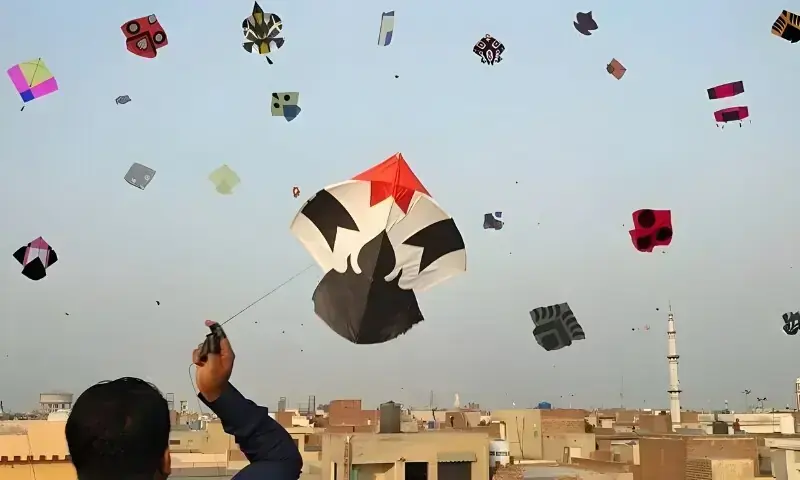
For Lahoris, Basant has never been just a festival; it is a feeling. It is the sudden burst of yellow on rooftops, the hum of kites in the sky, the rhythm of dhols echoing through old streets, and a city momentarily forgetting its worries. Yet, for many others, Basant represents extravagance, danger, and painful memories of lives lost to reckless celebration. This duality is exactly why Basant remains one of the most debated traditions in Lahore.
Over the years, Basant transformed from a cultural celebration into a competitive spectacle. The obsession with winning, expensive chemical strings (dors), and unchecked commercialization overshadowed its original spirit. Tragic incidents—people injured or killed by sharp strings, motorcyclists losing their lives, birds wounded—forced society to confront an uncomfortable truth: joy without responsibility can be deadly. The eventual ban, though heartbreaking for many, felt necessary at the time.
Now, as Basant cautiously re-enters Lahore’s social landscape under strict regulations, it invites an important question: Can we celebrate without repeating our mistakes?
Those who oppose Basant often argue that it is a waste of time and money in a country grappling with economic hardship. When inflation is high and basic necessities are a struggle, spending thousands on kites and rooftop parties feels irresponsible. Others add that no amount of regulation can fully eliminate risk, especially in a society where rules are often bent.
On the other hand, supporters believe culture is not a luxury—it is a necessity. Festivals like Basant provide emotional relief, strengthen social bonds, and keep traditions alive in an increasingly stressful world. Lahore, a city known for its food, art, and history, loses a piece of its identity when such traditions disappear. Moreover, with proper enforcement—eco-friendly strings, designated flying areas, time restrictions, and strict penalties—Basant does not have to be dangerous.
Perhaps the real issue is not Basant itself, but how we choose to celebrate it.
The renewed celebration under close scrutiny is a test of collective maturity. It asks citizens to prioritize safety over competition, simplicity over excess, and life over momentary thrill. It also challenges authorities to enforce laws consistently, without favoritism or negligence.
Basant can no longer be about cutting someone else’s kite at any cost. It must return to what it once symbolized: the arrival of spring, shared joy, and community spirit. If we fail again, the blame will not lie with the festival—but with us.
Lahore stands at a crossroads. We can either let Basant remain a cautionary tale of what went wrong, or transform it into an example of how traditions can evolve responsibly. Celebration and caution do not have to be enemies. With awareness, discipline, and respect for human life, Basant can once again color Lahore’s skies—without darkening its conscience.


Leave a Reply